
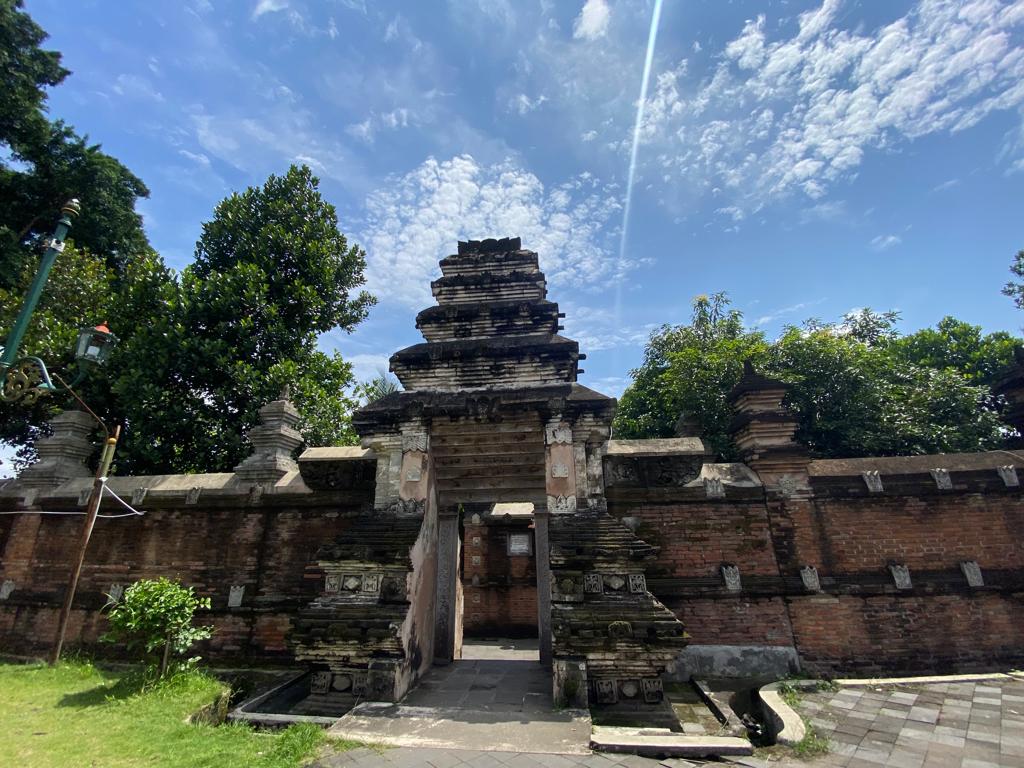
Where Old Stones, Street Art, and Stories Still Breathe
Kotagede is not the kind of place you rush. It’s the kind of neighborhood that gently asks you to slow down, look around, and listen. Tucked quietly in the southern part of Yogyakarta, Kotagede feels like a living museum—but in the most casual, friendly, everyday way. No velvet ropes, no glass displays. Just narrow alleys, old houses, murals on walls, and stones that have been standing there for hundreds of years.
If Yogyakarta is a book, Kotagede is one of its earliest chapters.
And the best part? You don’t need a history degree to enjoy it. You just need curiosity, comfortable shoes, and a little time.
A Quick Backstory (Don’t Worry, This Is the Fun Part)
Kotagede was once the capital of the Mataram Sultanate in the late 16th century. Long before Malioboro became busy and Instagram-famous, Kotagede was the heart of political, cultural, and economic life in Java.
Today, what remains are fragments—but beautiful ones:
- Ancient stone walls
- Sacred graves
- Traditional Javanese houses
- Old mosques
- Craft villages
- And surprisingly modern street art
History here doesn’t shout. It whispers.
Streets That Feel Like a Storybook
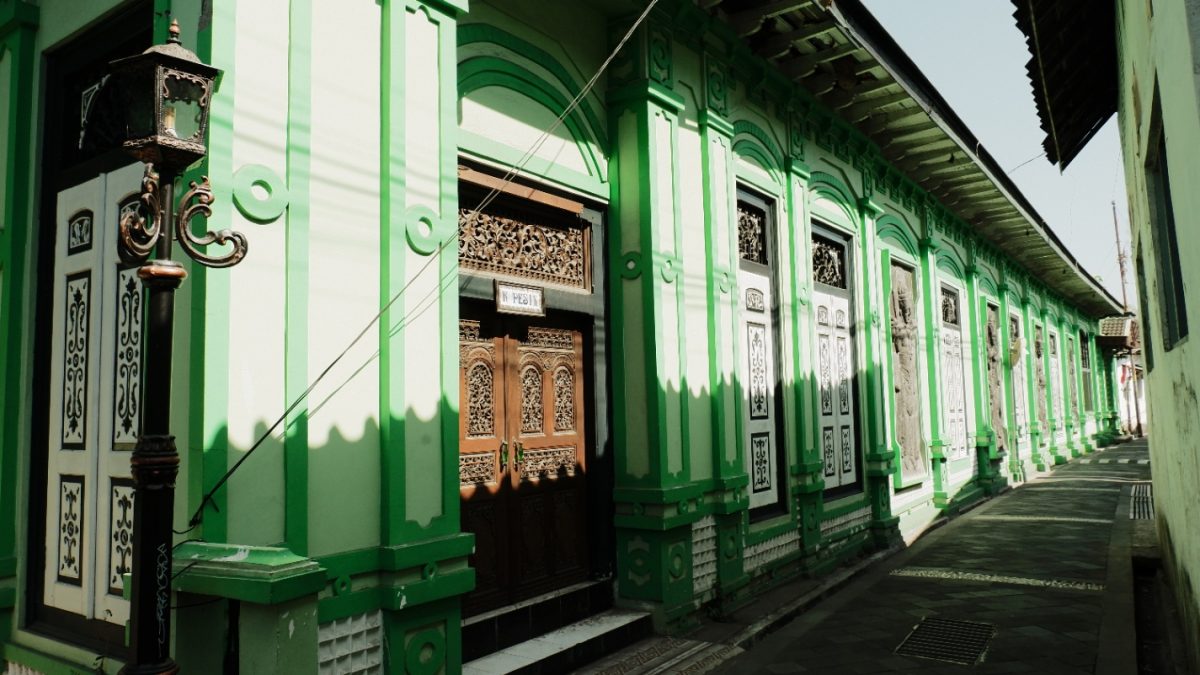
Walking through Kotagede feels like entering a different rhythm of life. The roads are narrow, the houses sit close together, and the walls seem to carry memories.
You’ll notice:
- Old wooden doors painted deep green
- Thick stone bases protecting houses from floods
- Clay roof tiles that have survived decades of rain
- Quiet corners that feel oddly peaceful
Every turn feels unplanned, organic—like the neighborhood grew naturally around human life, not cars.
Art on the Walls: When Tradition Meets Today
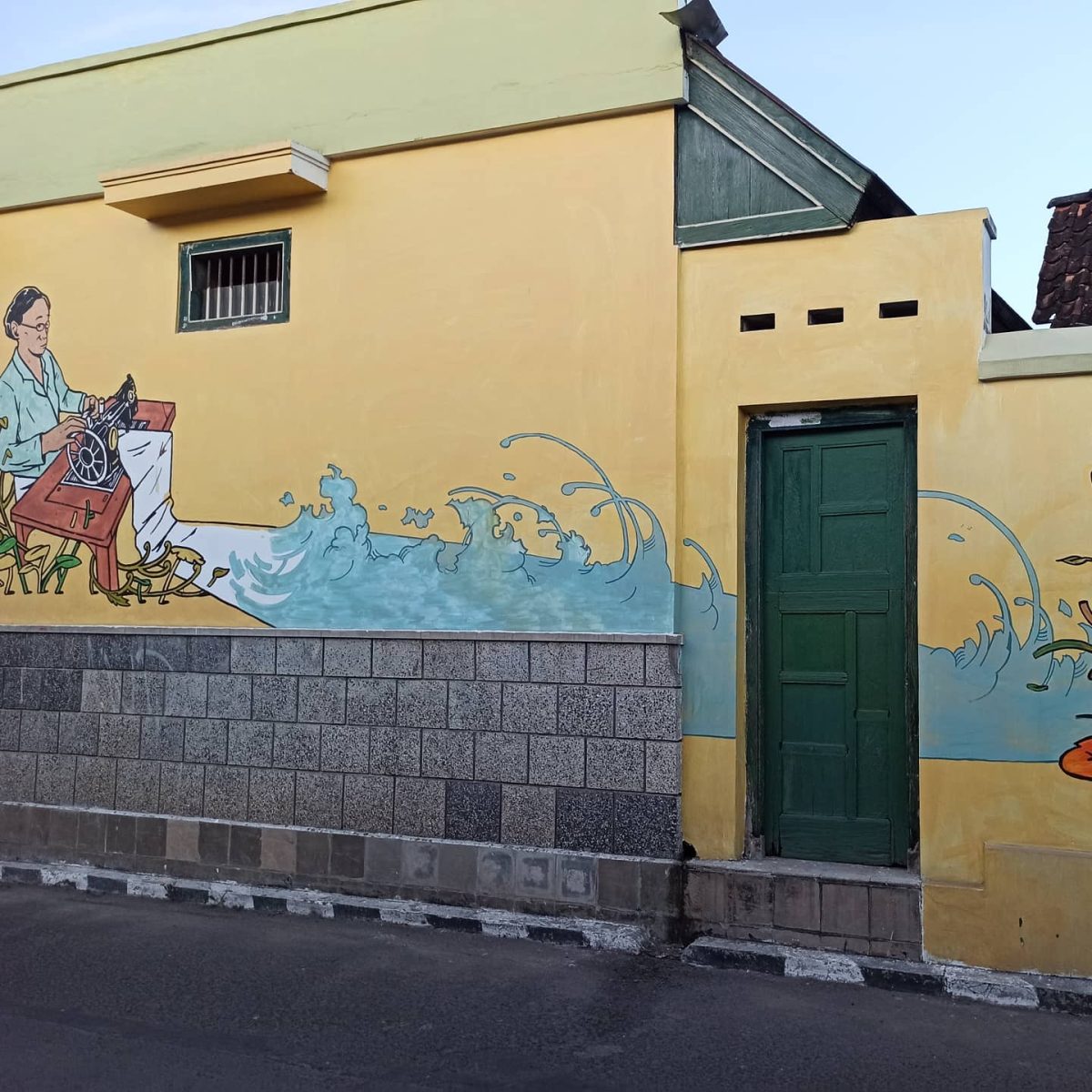
One of the most delightful surprises in Kotagede is the murals.
Against warm yellow walls, you’ll find hand-painted illustrations inspired by Javanese life. Traditional figures sit calmly, surrounded by flowing water patterns—symbolic, gentle, and poetic.
These murals don’t feel forced or overly trendy. They blend in, like they’ve always been part of the neighborhood. They tell stories visually—about craftsmanship, patience, and daily life in the past.
It’s art that doesn’t ask for attention, but rewards you when you notice it.
Wayang Figures in the Digital Age
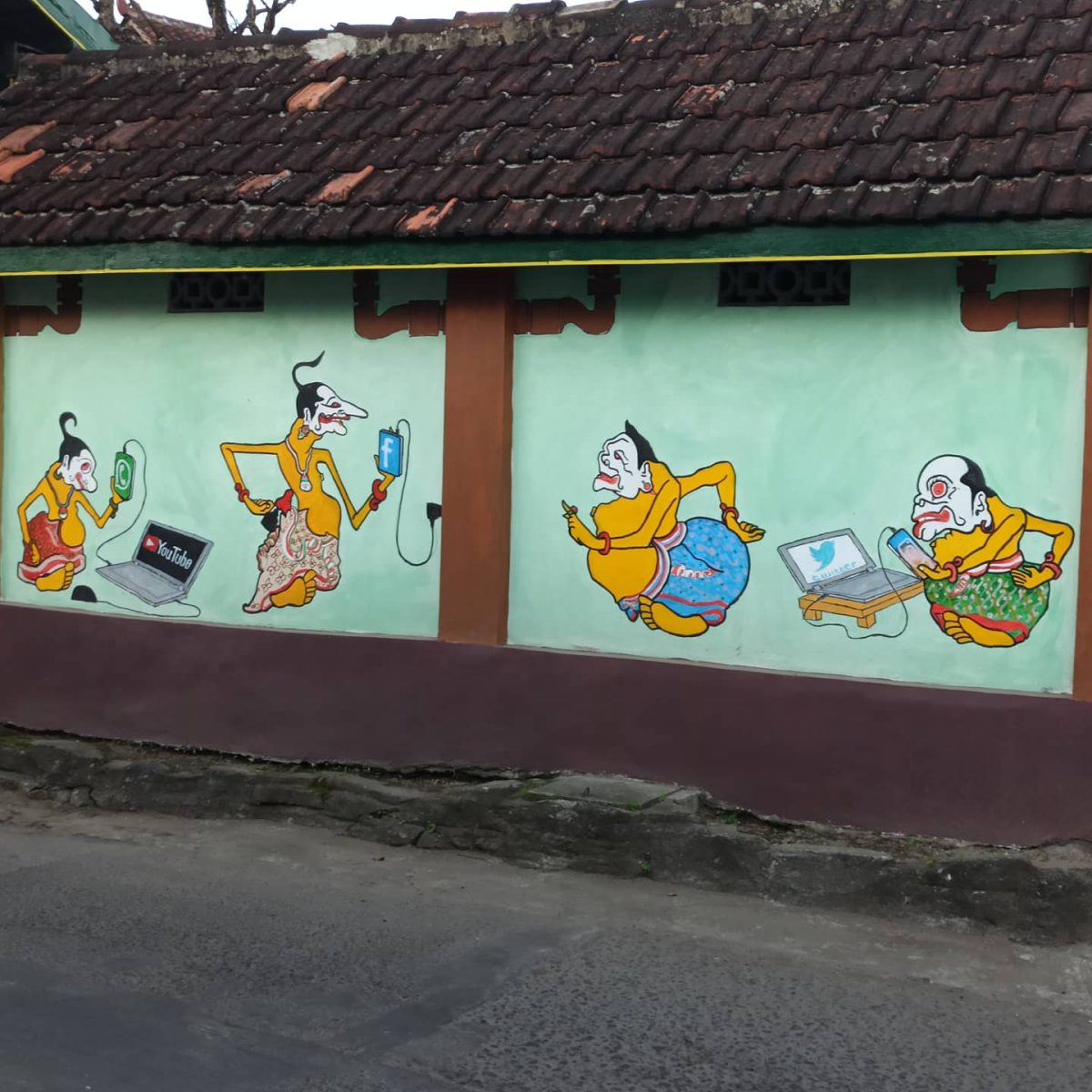
Then comes a wall that makes you smile.
Here, traditional wayang-style characters are humorously depicted scrolling through social media, holding smartphones, and working on laptops. You’ll spot familiar icons—YouTube, Facebook, Twitter—woven into the artwork.
This mural is playful, clever, and quietly educational.
It reminds us:
- Culture evolves
- Tradition doesn’t disappear—it adapts
- Even ancient characters would probably be online today
It’s Kotagede saying, “Yes, we respect our past—but we live in the present.”
Situs Benteng Cepuri: Silent Stones, Loud History
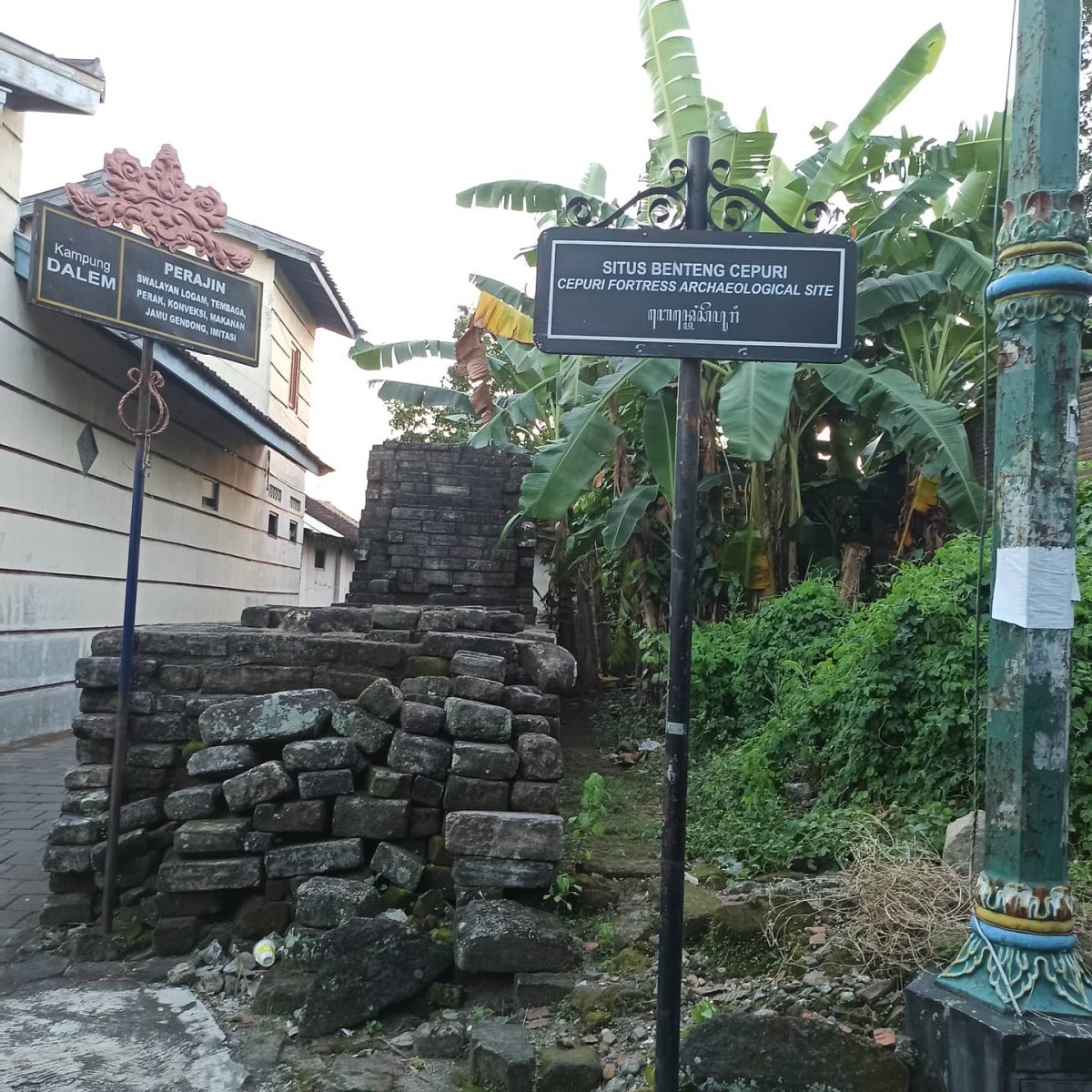
The Cepuri Fortress Archaeological Site is believed to be part of the inner defense system of the old Mataram capital. What remains today are stacked stones—uneven, weathered, quiet.
There’s no dramatic reconstruction here. No flashy boards. Just rocks, greenery, and a sign marking their importance.
And somehow, that simplicity makes it powerful.
Standing there, you can’t help but imagine:
- Guards watching the surroundings centuries ago
- Royal processions passing nearby
- The slow rise and fall of a kingdom
History doesn’t always need grandeur. Sometimes, stones are enough.
Kampung Life That Feels Real
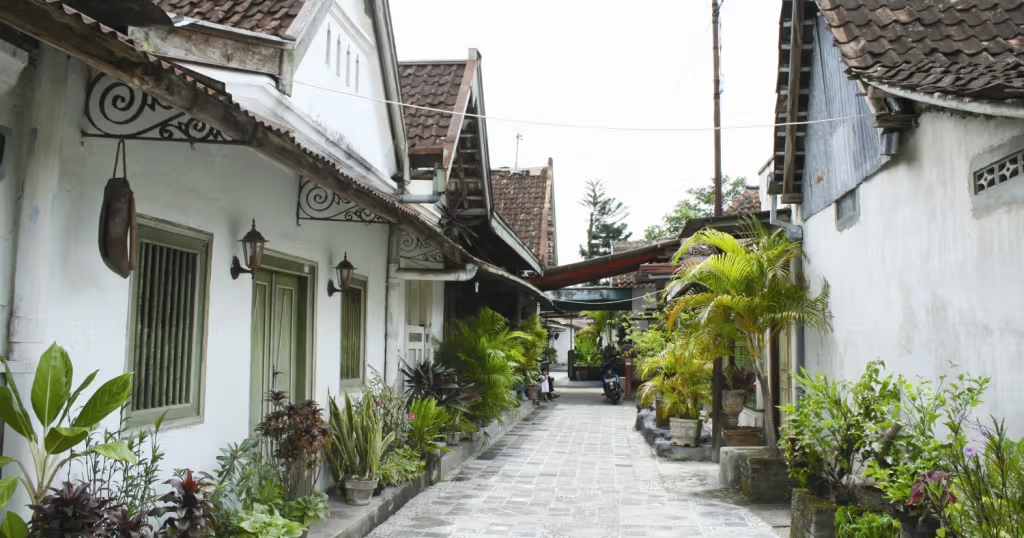
What makes Kotagede special isn’t only its historical sites—it’s that people still live here.
You’ll pass:
- Residents chatting in front of their homes
- Small warungs selling snacks and drinks
- Craftsmen quietly working
- Motorbikes carefully navigating narrow lanes
Life here feels unpolished, honest, and calm.
No one is performing for tourists. And that’s exactly why it feels authentic.
Silver, Craft, and Creativity
Kotagede is also famous for its silver craftsmanship. For generations, artisans here have created intricate jewelry and decorative items by hand.
Even if you don’t buy anything, watching the process—or just knowing it’s happening behind those doors—adds another layer to the experience.
This is not fast production. This is patient work.
And it fits Kotagede perfectly.
Why Kotagede Feels Different
Kotagede isn’t trying to impress you.
It doesn’t have:
- Loud attractions
- Trendy cafés on every corner
- Perfect photo spots everywhere
Instead, it offers:
- Atmosphere
- Layers of history
- Quiet beauty
- Thoughtful art
It’s the kind of place you appreciate more after you leave.
Tips for Exploring Kotagede
If you’re planning a visit, here are a few gentle tips:
- Go slow – walking is the best way to experience Kotagede
- Morning or late afternoon is ideal for soft light and cooler air
- Respect local spaces, especially near sacred sites
- Talk to locals if you get the chance—they’re often warm and helpful
- Don’t rush photos—some moments are better remembered than posted
Kotagede in One Sentence
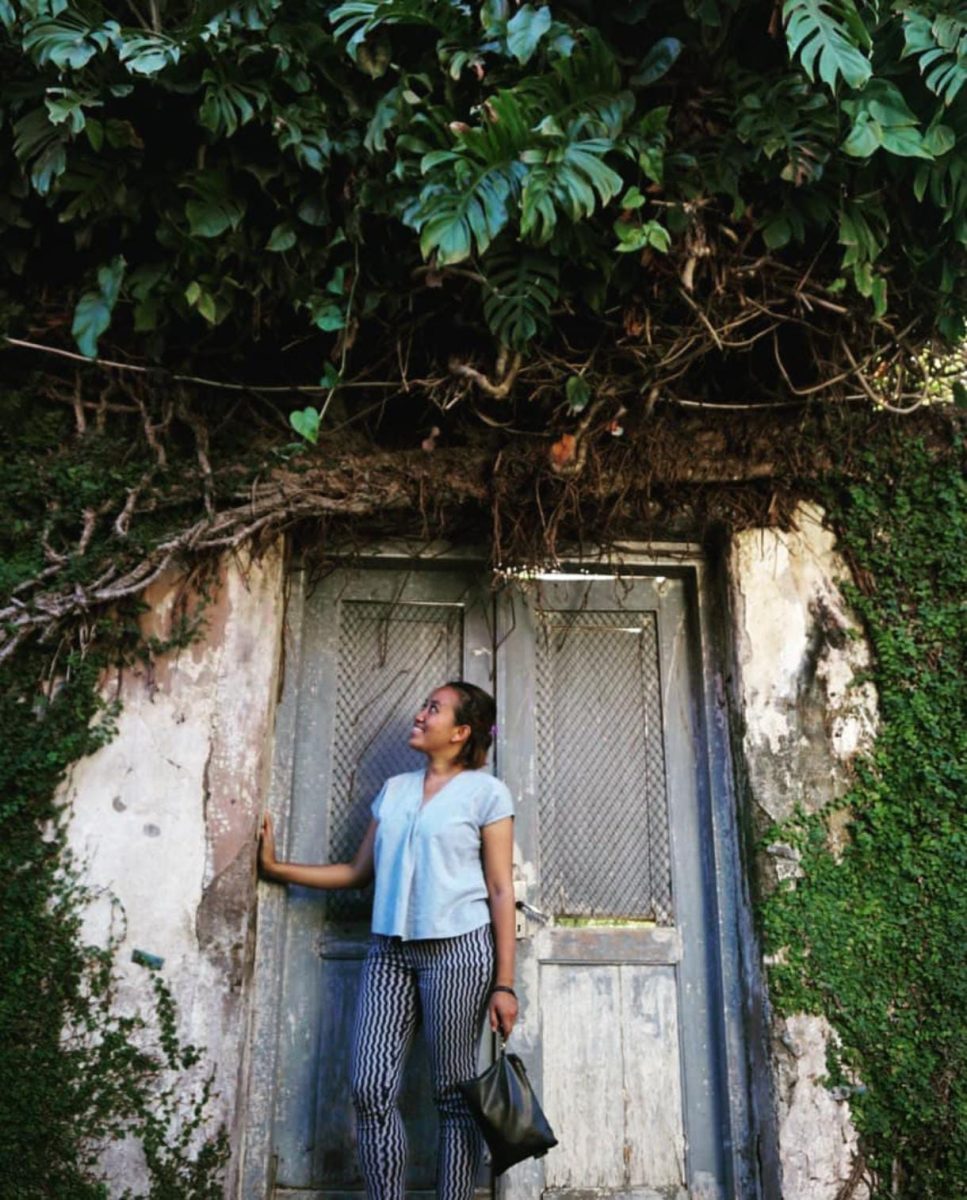
Kotagede is where Yogyakarta quietly keeps its memories—painted on walls, stacked in stones, and lived by its people.
If you’re looking for a place that feels educational but never boring, historic but still alive, and casual yet meaningful, Kotagede might just steal your heart—slowly, gently, and without trying.
And honestly? That’s the best kind of place.






One Response